

From £5 Butcher's Shop To 500 Stockists: The Korker Sausages Story

There is something quietly remarkable about a family business that has spent more than six decades doing one thing very well. In the Kent village of Rolvenden, the Hoad family has done exactly that, and in doing so has built one of the county's most cherished food brands on the back of a single recipe, a strong sense of place and a willingness to let each generation leave its mark.
Paul Andrews spoke to India Hoad to find out more.
"I'm third generation, and my role is Head of Sales and Marketing," India explains. "We're a small team, so everyone gets involved. I also help across other areas of the business and in the factory whenever I'm needed."
Asked what the family business means to her, her answer is immediate. "Family. It's something my grandad started and our family has worked hard to build. Being part of that history means a lot to me, and I'm proud to help carry it forward for the next generation."
A Humble Beginning
The Korker story starts with a young man learning his craft. Jim Hoad trained as a butcher with Sainsbury's in 1954, and five years later he took the step that would define his family's future. In August 1959 he bought the butcher's business from his godfather for the princely sum of £5, on the understanding that he would clear its existing debts, while the previous owners stayed on to help with the daily running of the shop.
"My grandad founded Korkers in 1959 after buying a small butcher's business for just £5, in the same village where we're still based today," says India.
"He started by selling cuts of meat, then spotted a gap in the market and began making sausages. He also established a delivery round that's still running today."
That recipe has its own long lineage. The original sausage was made to a recipe that had already been in the Hoad family for four generations, and for India it remains the heart of the brand. "Our history and heritage are what make Korkers, Korkers," she says.
"Our bestselling product still uses the recipe my grandad created, and we have customers who have supported us for decades. That loyalty means so much and reflects the consistency and quality we work hard to maintain."
Adapting to Survive
Every enduring family business faces a moment when the market shifts beneath its feet, and Korkers was no exception. When a larger corporate competitor arrived in the area and customer habits began to change, Jim chose to concentrate on sausage production, with John Hoad becoming the company's first distributor and taking the product out to local retailers and customers.
It proved an inspired decision. The reputation for quality spread so far that the little shop simply could not keep up, and in 1981 Jim built a dedicated factory for wholesale production. Rather than being threatened by a bigger rival, the family found its niche and leaned into it.
How many family businesses today would have the courage to close the shop front that built their name in order to pursue something new?

Raising the Next Generation
What stands out in the Korker story is how naturally each generation has been brought into the fold. Jim's children would often help out at the factory during the school holidays, learning the business as young apprentices, and in 1981 his son Robert joined full time. Ed followed in 1986 and went on to build experience across every part of the operation, equipping him well for his role as Managing Director.
The product range grew alongside the family. Handmade sausage rolls were introduced in 1989 in response to demand, a Chilli seasoning followed in 2000, and the Korker Burger arrived in 2010.
India's own route in followed a familiar pattern at first, before taking a detour. "As soon as I was old enough, I worked in the factory during school holidays to earn some pocket money. But I never planned to join the business full time," she admits. "I studied Property Development and Planning at university, with the aim of becoming a property developer. In 2021, I moved to Dubai to work as a real estate agent. When I returned home, I took another estate agency role, but it didn't work out. I came back to Korkers and never left!"
She sees real value in that time away. "I believe everything happens for a reason. So much of what I learned elsewhere has been transferable, and I've discovered how passionate I am about working in our family business."
Is there a stronger case for encouraging the next generation to gain experience outside the family firm before they commit to it?
Passing the Baton
Succession is where so many family businesses stumble, yet at Korkers it appears to have been handled with care. Jim retired in 2014 and passed the business to his children, with Ed and Robert taking charge of production and day to day management.
Five years later, the company's 60th anniversary was marked with sadness when Jim passed away in February 2019. In 2022 Robert retired, leaving Ed as Managing Director, and India formally joined the following year.
So what has allowed Korkers to endure where others have faltered?
"Communication and trust are key," India says. "Being family doesn't mean working together is always easy, and running a business with relatives comes with its own challenges. You need to talk openly, listen to each other and trust one another's judgement. We all care about the business and want it to succeed. Keeping that shared goal in mind helps us work through challenges together."
Values That Look After People
For India, the values that underpin Korkers extend well beyond the product. "Quality, trust, and looking after our people are really important to us," she says. "Since joining Korkers, I've focused on developing our marketing and social media, but also staff wellbeing. We've introduced staff outings, an encouragement board, healthy snacks in the staff room, and toiletries in the women's toilets. These might seem like small things, but I want our team to feel appreciated, supported, and happy at work."
When did you last ask your own team what small change would make them feel more valued?
Investing for the Future
A family business that is serious about longevity has to invest, and the Hoads have done just that. Plans to extend the factory were submitted in 2020 as the business pushed further into wholesale, and after three years of development the extension was completed in 2023.
India counts it among her proudest moments. "There are two that are very close. The first is seeing our factory extension completed, increasing our production area by 50%. Seeing that investment in the future of the business become a reality was a proud moment. The second is winning the UK's Best Frozen Sausage award in 2025. We're finalists again this year and will find out the result in October, so we're keeping our fingers crossed!"
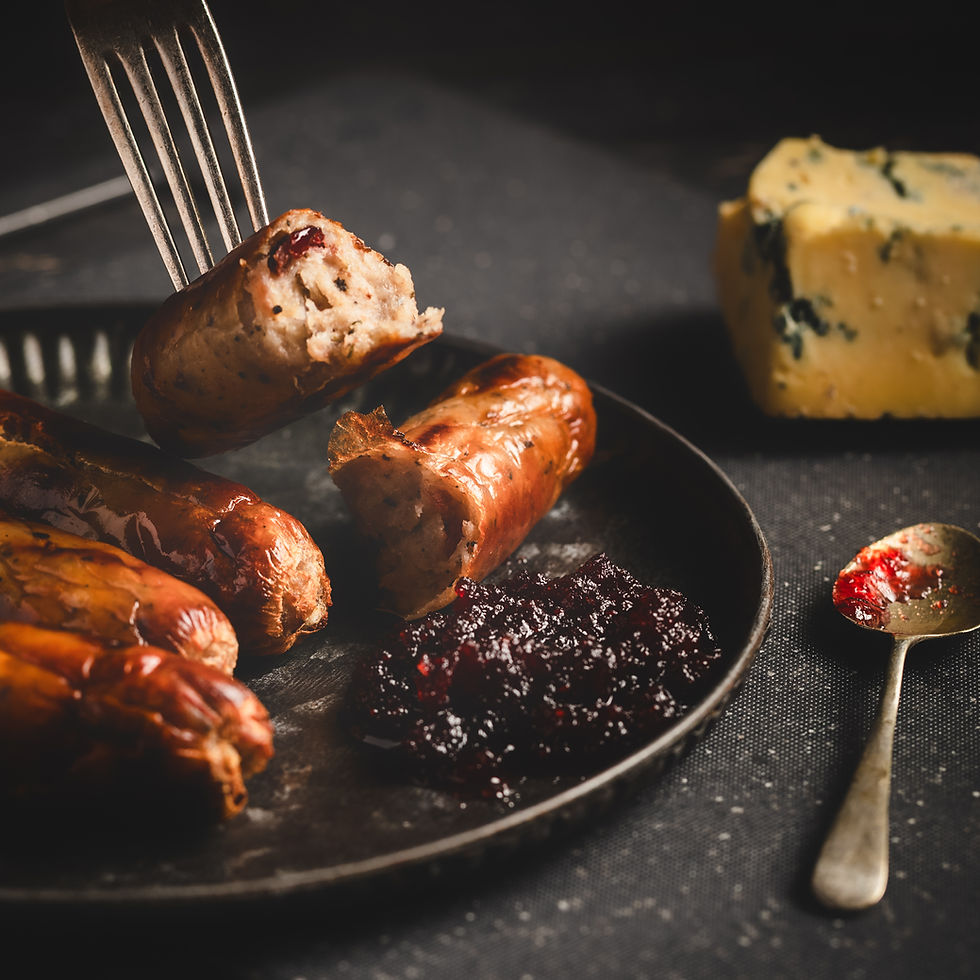
Innovation has continued apace. Recent additions include Gluten Free Halal Chicken Sausages, Caramelised Onion Sausages and Sausage Rolls, and a Cranberry and Stilton variety. The chicken range shows heritage meeting modern demand: it is made with the original 1959 seasoning yet designed for coeliacs and health conscious shoppers.
Rooted in Community
Perhaps the most telling measure of Korkers' success is the loyalty it inspires. The business supplies independent retailers, pubs and restaurants as well as major wholesalers across Kent and East Sussex, and some of those relationships span generations of their own. One family running the Pepper Box Inn notes that their grandfather was Korkers' very first restaurant customer around 60 years ago, and they still serve the sausages today.
"For most of our history, word of mouth has been our main form of marketing," India says. "Having people recommend us to their friends and family is something we're very proud of."
The reach now extends well beyond the Weald. The company counts more than 500 UK stockists and runs a nationwide postal service, yet the factory remains in Rolvenden and the business is still owned and run by the Hoad family.
Looking Ahead
India is clear about where the business is heading. "We want to keep growing and introduce Korkers to more customers across the country. Our new Business Development Manager and I are travelling around the UK, exploring new business opportunities and spreading the word about the Korker brand."
She also sees a chance to shift perceptions. "I want to explore more ways of reaching younger generations through social media and challenge misconceptions about frozen food. It's an opportunity to show people our products, the care that goes into making them and the family behind the business."
Korker Sausages is a textbook example of what makes family businesses so resilient. A trusted recipe provided continuity, a willingness to pivot kept the business relevant, and open communication has allowed each generation to take its place without upheaval. In India Hoad, the business has a third generation leader who honours her grandfather's legacy while bringing fresh thinking on marketing, wellbeing and growth.
With a newly expanded factory, an award to defend and ambitions to take the brand nationwide, the Hoads look well placed for their seventh decade and beyond. The lesson for others is simple: protect what makes you distinctive, look after your people, and never be afraid to change how you deliver it.

.png)


