3227 results found with an empty search
- Launching A Nationwide Delivery Family Business
Assured Same Day Couriers was Founded in November 2019, started trading January 2020. It is a nationwide same day delivery company with access to 3000 vehicles from motorbikes to artic trucks which transport anything from urgent legal documents to camera equipment, stage props to medication and building materials. Paul Andrews spoke to founder Peter Lloyd to find out more. Tell me a little about the history of the business? After a career of 20 years at Thomas Cook Airlines which went bust in Sept 2019, I found myself out of work, my wife worked part time in charity retail but she quickly went full time! In the October I got a job for a same day delivery company as a Transport Co-ordinator. 5 weeks later I was out of work again as the owner decided to close the business. With 2 young children at home 2 and 4, my wife and I decided to start our own same day delivery business. I would be working at home, looking after the kids whilst setting up and building the business. What generation are you and what are your first memories of the family business? Although this is a new family business, I am not new to a family in business together. My Great Grandad started a Funeral Directors mid 1930’s which lasted 3 generations. Our house also had a chapel of rest and Dad would get called out 24/7 which always seemed to coincide with when we sat down for dinner together or when we were all together as a family. We were always around the business. Funeral cars at home, families of deceased coming round to arrange the funerals… One thing I learnt very quickly is the hard work that is required to go in to make your own business a success. Are there any other family members working in the business? Yes, my wife Emma. What do you do now? My main role now is booking in all of the deliveries, on the phone speaking to customers. Once the working day is complete I then catch up on all the paperwork involved. There is a lot of work going on with advertising online/social media. We have also just signed a sponsorship deal with Newport County FC where we sponsor one of their strikers. What values are important to the family and the business? Honesty and to be the best you can be. We teach our children to be honest with us and be the best they can be. An example is with my sons homework – if its difficult and he’s struggling to understand, its ok. All we ask is that you try the best you can. I also use these values in work. I am also honest with customers. Things can change quickly out on the roads and not always in our favour. I tell the customers straight, and don’t try and cover anything up. Customers know when something isn’t right so I always like to have a Plan B! What do you think makes working in a family business special? It brings the family close. My wife and I like the fact that we are self-sufficient. We rely on ourselves. Are there any disadvantages associated with working in a family business? I can honestly say that there is no disadvantage that I have come across. What advice would you give to anyone considering joining their family firm? Be prepared for it to be on your mind 24/7. There are no days off! If you could sum up the family business in three words, what would they be? Transparent, Flexible, Fun. Find out more by visiting their website here
- Keeping All The Pieces Of The Puzzle Together At Gibsons
2019 marked 100 years since Harry Percy Gibson formed H. P. Gibson & Sons Limited. Now into their fourth generation with Harry’s great-granddaughter at the helm, Gibsons are proud of their British heritage and that they are still providing fun family pastimes for all ages, 102 years on. The team and product offering have grown a lot over the last ten decades, however their values remain the same. ‘Bringing people together’ underpins everything they do: from encouraging people to play games, and creating a thriving working culture, to supporting a local children’s charity and valuing the relationships with their suppliers and customers. Paul Andrews got to meet fourth generation leader, Kate Gibson, to find out more. Kate grew up in the family business and remembers well the achievements and hard work put in by the previous generations. One of her first memories of the business was the visits during the school holidays with her cousins, earning pocket money assembling and packing games. Kate remembers fondly being given games to play with and test, all part of life in a business that is all about games and puzzles! Joining the family business was never originally part of the plan for Kate. As she explains, “It wasn’t something I had given proper consideration to, possibly because when I was younger, I didn’t fully appreciate enough what it was like to own and run your own family business. My Dad, Michael, was busy working hard to make a success of the business and there was never any pressure for me to get involved. I initially pursued my own career and headed off to university. After graduating I worked in the charity sector and other marketing roles.” Things changed in 2005 when Kate joined her Dad on a trip to the Autumn Fair at the Birmingham NEC. An Operations role had arisen in the business and with Kate considering her next career step, they decided she should give it a go. After a year and with a great foundation in the business, Kate transitioned into a different role playing to her strengths in marketing, product development and strategic insights. It was evident that Kate added value, bringing structure and people together and creating the culture that has become the very essence of what Gibsons is about today. In 2016, with Michael close to retiring, Kate and her Dad spent much time considering the future of the business. Kate continues, “There was a bit of soul searching and contemplating the responsibility that lay ahead. I have two young girls and I remember the long hours my Dad had worked. Work-life balance is, and always has been, important to me so we formulated a plan to take us forward making changes to ensure there is the right balance and that I am there for my daughters too. In October 2016, I stepped up to the role of Managing Director and have never looked back.’ For Kate, the role offered many challenges, but presented huge opportunities too. “It is a fantastic place to work. I love so many things about the business, why we do what we do, our purpose, and the people that we interact with each and every day. The business has energised me and the fact that we produce such fantastic products is great – there is always a buzz when I see one of our boxes on the shelf too.” Although her Dad has now stepped down and left Kate to run the business, he remains a sounding board and the company Chairman, so still retains a limited involvement today. As Kate continues, “We put a plan in place and agreed the way forward. Dad stepped back, reducing his day-to-day involvement in the business and let go. This was not easy for him as he had worked so hard for so long in the business but he did, helped enormously by the fact that he trusted us and even today, he remains an important asset because his knowledge and experience is so valuable. He was also very supportive and helpful to me in transitioning to the leadership role too.” As Kate stepped up to lead the business, she set out on a journey to transform and further build on the legacy of her father, empowering and trusting the team whilst building a broader understanding of the market and developing her skills. As Kate adds, “I sought a coach and joined a leadership group that added so much to my development and I also regularly attend conferences to help me continue to learn. I have prioritised our sustainability and championed our CSR programme ensuring we are truly part of, as well as helping the community. It has not been easy, and the pandemic has posed some challenges for Gibsons, as it has for many other family firms. “Managing change and growth can be daunting, but for me it has all been about remembering why we do what we do” continues Kate. “The pandemic and the need to review the way that we operate afforded us opportunities to look at everything we do. We thoroughly reviewed all of our systems, processes and contingency plans ensuring we embrace technology to really help us future proof the business, whilst appreciating the implications on morale and team dynamics with hybrid working practices. It also reinforced our values and the culture of the business which is important and will remain so going forward.” Like many family firms, values are integral to defining the business and Kate oversaw a review of the core values at Gibsons. Staff were consulted and the core values reaffirmed as Trust, Collaboration and Community. As Kate explains, “These values are so important to us as a family business and it is important that they are integrated into what we do and the way that we do it. It creates our culture and the very vibe of the organisation and helps us move forward with purpose and clarity.” “Obviously these values need to be demonstrated too and it is important to me that it all starts at the top with the way that we manage and lead the business too.” The audience for Gibsons products is continually evolving but it is all about bringing people together. As Kate explains, “Traditionally our customer demographic for jigsaw puzzles has been predominantly retired females who puzzle as a hobby, but over the last few years this has changed with the growth in mindfulness and many younger people stepping away from their screens to relax. We have had to change and adapt to the new audience and to ensure that we remain relevant to as many people as possible. Puzzles are tactile and offer the chance to sit, reflect and just ‘be’ for a moment in amongst our busy lives. Add to the mix our range of games and it is all about family and fun too. We’ve seen huge growth of the brand Internationally too and new audiences discovering what we do.” “I love the business and what it has become. I have a real sense of pride driving something that has lasted over a hundred years and our centenary was truly special. At times, I have had to dig deep and believe in myself, learning as I go and developing the more extrovert side of my personality, but this has really paid off." "I have found my place and been able to create a work-life balance that works for me, the business and the family.” As Kate concludes, “It is an honour and a privilege to continue what my great grandfather started back in 1919. Every day is different and there are times when running the family business brings challenges to overcome, but primarily there is pride and excitement at being part of something very special. Working at Gibsons means being open to adapting and learning new things wherever we can, ensuring that we move forward and get better at what we do. Games, puzzles, people and play just about sums up what we do here, but the most important of these is people.” “The Gibsons Gang are at the heart of our company, their passion driving us forward. I can’t wait to see what the next 100 years bring!” Find out more at www.gibsonsgames.co.uk
- Next Gen Sets Sail From University And Family Business Continues To Grow
Ross Testa launched his social media advertising agency whilst at university in what turned out to be the start of what is becoming an incredible family business journey. Dad, Roy and sister Jodie are now heavily involved too. Paul Andrews spoke to Roy to find out more. As Roy explained, “I have a marketing background and over the years have run newspapers, magazines and websites so have always been involved in the sector. My son, Ross was at university and started his business venture and won a few clients such that toward his final year he asked me whether he should finish the course or continue to build the business.” “As any father in the same situation will tell you, this was not an easy decision but education is important and he had come so far that I told him to complete the course and then focus on the business. It was at that point, December 2017 that we set up the business together and began in a small basement office with no windows around 6 m sq, just Ross and a freelance friend and the business started to grow.” As Roy adds, “I was always involved but due to an existing position that I was tied to for a period of time, I was not publicly involved at the start. I was the sounding board and offered guidance and together our roles and responsibilities were being determined, something that has helped on the journey to date and is important when working closely with friends and family. I officially join the business during the first pandemic lockdown.” This is clearly an entrepreneurial family and one that works well together with plenty of communication and conversation. As Roy continues, “I have always been in business and the family has always been involved in one way or another and so the dinner table was often filled with business talk. Now that we are a working family business, we have not changed anything but far from the business taking over at home, we all actually appreciate the need for a work-life balance and we know when not to talk about the business too. There is an unwritten rule that if we are with people that are not involved in the business then it is not the topic of conversation either.” It is often a fine line but many families in business cross the line and the conversations take over but Roy and the family have found a balance that works for them, and is something that others would do well to follow. Clear roles and responsibilities also help maintain the balance too. As Roy adds, “Over the years in my own career I have really enjoyed employing people and with coaching and mentoring seeing them grow into competent individuals. Now, working with my own flesh and blood it is even more rewarding to see them develop and in the short time that we have been working together they have already come on leaps and bounds and to see them holding their own and delivering to really experienced brands is fantastic. My role is to oversee and steer the ship, supporting Ross, Jodie and the wider team as the business grows, drawing from my experiences and pulling things together.” Since starting out the business has grown, they have moved into a new, bigger office space and now employ 12 people. “We are a creative agency and need space and despite the pandemic found the office helped people to work together and bounce ideas,” he continues. “As a business our people are really important and they need to feel valued and we have worked hard to create a good environment in which to work, and to recognise and reward success too. Roles are clearly defined and it helps that as a family we all have different, and complimentary skills too. Ross is the networker, actively pursuing leads and business development whilst being the champion of social media and driver of growth. Jodie is responsible for the logistics and operations is organised and works well with clients and staff and Roy is all about the commerciality of the business and driving resources and structures as the business grows.” As a business they have an excellent client bank, many driven through referrals and recommendations, something that has come as a result of hard work, determination and a stroke of luck. The agency’s work was spotted early on by Lord Sugar and resulted in Ross being hired to create some video content for one of his businesses. Other clients followed included Chelsea Football Club, Volvo, Silverstone and others. Not bad for a business that was created in the final year of a university course and now continues to grow. This is clearly a close-kinit family who get along, something that proved vital as Jodie and Ross still live at home and as a family they were together a lot during lockdown! “We all have a lot of respect for each other and get along so whilst others may have found it a challenge, we were driven. We are driven to create something together and put in the hours we need to – as I am sure anyone else working in a family business will tell you, it is never simply nine to five!” Driven, determined and with a real sense of purpose, this is a business to watch in the years to come. As Roy confirms, “First and foremost we are a business but we love coming up with solutions for our clients and to enjoy what we do. We truly value all of our staff and despite sounding ‘corny’ treat them as an extension of our family." "We value them and part of our strength as a business is our people and we are proud to tell everyone that we are a family business. It’s who we are and defines what we do. However, we are forward thinking and want to grow and recognise the need to develop our people and offer them opportunities.” “We might be a small team but our team comes from all over the world and if their ambitions are to follow their own dreams in the future, we will encourage them and who knows we could be creating the family business leaders of tomorrow too,” adds Roy. For now, this family business is set to flourish, building on the individual strengths and capabilities of the management team, bringing in new skills as required, focusing on the values that matter and introducing frameworks and responsibilities as the business evolves. There is a palpable buzz and energy when you speak to the team which will stand them in good stead as they move forward too. But, as Roy concludes, “We work hard as a business and as a family and there is no letting up. Being a family business is no different to any other, as long as you treat family members the same as everyone else and there is certainly no ‘golden ticket’ just because you are family. But the fact that we work hard is not an issue. Working together as a family in a growing business is a dream come true for me and to help shape, mentor and see my kids flourish is a real joy. And above all, it makes a difference, something that our clients see, not just in terms of who we are and the culture we have created, but the quality of our work too.” The journey may only be a few years old but it is clear that there is a long road ahead as this entrepreneurial family business continues to move forward. Visit their website here to find out more.
- Family Firms Value Crisis Management
For a family-owned business nothing is more important to an organisation than the nurturing and protection of its reputation. Having a family enterprise is not only a privilege – it’s also a huge responsibility. Unlike many boards of publicly owned entities, due to their personal connection, families have additional emotional investment in their business. They are in it for the long haul to create a legacy for their family. Custodians of valuable assets that provide for their family, and like all assets, its value needs protection. Carl Courtney shares his thoughts. According to the Institute for Family Business there are 4.8m family-owned enterprises in the UK which comprise 85% of all private enterprises. In the most recent figures from 2017, they collectively generated 28% of the UK GDP, amounting to a staggering £18.8 trillion a year. The message is clear – collectively, family-owned entities are big business. Family Firms Protect Their Corporate Reputation Generally speaking, family-owned firms tend to be more careful with their corporate reputation. After all, it’s more than just a business for them. It’s a reflection of their family and represents their place in the world. Successful family firms have the capacity to deliver an ongoing stream of revenue, and in some instances, significant wealth. Family owners see the value in the reputational insurance good Crisis Management brings to the table. Marsh Consulting hits the nail on the head, stating, “A dollar invested in Crisis Management returns $7 in averted costs." Investing In Privacy In my early twenties, when I had just launched my own PR firm, I was introduced to an enormously wealthy entrepreneur of a highly respected, but little-known family business. I pitched to him in his ‘office’ – an entire floor of an office block with only him and his office furniture occupying the space (a surreal sight indeed). I presented all the great ideas I had for getting him and his enterprises a high media profile, and how this would translate into further growth for him. He listened intently, and once I finished, he said he would be very happy to work with me, but my goal was to ensure he was never, ever featured in the media. His resolve was to invest in my services to keep his and his companies’ profiles as low as possible. Unbeknownst to me at the time, this was my first ‘Crisis’ client. Whilst nothing had gone wrong in his business, this hugely successful businessman placed a high value on investing in professional help to protect his reputation, and the reputations of his companies too. By reverse engineering everything I knew about publicity and learning the long-held sound principles of Risk and Crisis Management, I started on the journey of becoming a crisis management expert. Over the years I have worked for dozens of family-owned businesses (some for decades), putting in place systems and a knowledge set that protects the ‘family silver’ and allows them to sleep better at night. Five lessons From Family Business Crisis Management 1. Family businesses have a different, often more patient, perspective. They are more inclined to invest for the long term. This explains their tendencies towards having a crisis advisor – it’s a way of protecting their reputation in the long term. 2. “Experience is the name everyone gives to their mistakes.” – Oscar Wilde When young family members join the business, they usually learn the ropes from the bottom up. This learning period can result in teething problems that make for a good story. The better known the business, the more interested the media is. Contingency planning and the risk register need to reflect this, accordingly. 3. “You need people who can tell you what you don’t want to hear.” – Robert De Niro The term ‘family’ can be synonymous with fear. Non-family employees may have a predisposition to protect the family from bad news. However, this can be catastrophic if a crisis is emerging and available ‘time’ is everything. Training needs to be put in place to circumvent this avoidant, nervous behaviour. Making it clear that the messenger won’t be shot. 4. Trust and loyalty are often the drivers in a family business. Everyone in, or advising, a family business can be seen as an outsider if they’re not family. Trust has to be earned fast to be effective and loyalty is reciprocated. Families value longevity in a relationship and tend to hold onto their advisors once trust has been established. 5. Legacy is hugely important in family businesses. When the time comes to retire, accuracy of media profiles is important. This work needs to be done behind the scenes, and in advance too. Equally, when death occurs, accurate obituaries are non-negotiable. As with dealing with retirement, this sensitive work needs to be written and approved by the family. It bears to remember that age is not a factor here, either. However young the protagonists are, accidents and sudden ill health are, unfortunately, facts of life. Having this aspect of a family’s reputation managed by external specialist counsel is the most expedient method of successfully achieving this. Trusted Advisers Look After Secrets It’s true, family-owned businesses tend to be secretive. Unless their business is listed on the stock market, there’s no need to divulge too much. But being a trusted advisor and crisis counsel means we have to get under the skin of the business to be truly effective. In my experience, once you have proved yourself and deliver what you promise, you will likely forge a long-term relationship and become the sounding board for all sorts of situations. After a long-spanning career in crisis, I’m a bearer of many, many secrets!
- The Ongoing Journey At Hoggs Of Fife
As a family owned British Countrywear brand, Hoggs of Fife started making top quality leather footwear for the local Farming and Fieldsports community over 130 Years ago and have gradually built the brand and extended the collections so that today, they have a great reputation for providing hard wearing, good value clothing footwear and accessories across the globe. Paul Andrews spoke to fourth generation Managing Director Robert Gibson to find out more. When was the business founded? 1888 What does it do? We provide good value and fit for purpose clothing and footwear, predominantly for people who live and work in the countryside, but really for anyone who is enthusiastic about outdoor life. Tell me a little about the history of the business? The business was started by Andrew Hogg, a cobbler, in the small Fife village of Strathmiglo. Initially he made boots and shoes for the country folk of Fife, but soon this expanded to all corners of the UK, as he was an early pioneer of the concept of supplying goods by post. After his passing (in 1928), the business evolved into high street retailing, and then in the 1970’s, responded to a demand from other retailers, by opening its own trade business. Clothing had been added to the Hoggs of Fife product range in the 1950’s, so this combination of hard wearing country clothing, as well as the established range of footwear, became very popular with country retailers across the UK. What generation are you and what are your first memories of the family business? I am 4th generation. I guess my first memories are when my father would bring home boxes of catalogues, for us to ‘stick and stuff’ before being delivered to the post office for despatch to the thousands of customers on the company’s database. I also remember the beginnings of our Trade business, when I worked helping to pick orders in our very first warehouse (which was a disused cinema, whose only claim to fame was that it had held the Scottish premier of the film Brigadoon!). I remember my father telling me how important it was that everything carrying the Hoggs of Fife name, whether it be the product or a catalogue, should be fit for purpose and presented professionally, with all the details correct. Are there any other family members working in the business? Although she hasn’t settled on a career path yet, my eldest daughter has begun working part-time in the business. How important was the business in your life as you grew up? To be honest, in my early years, the business was more ‘something my dad did’ and living on the family farm, I was influenced more by farming, as a child. Of course, this background was to help enormously in my understanding of the wider country market, as my interest in the business developed later on. What was your journey into the family business and what do you do now? I studied with a local accountancy firm and, on leaving, took up a supposedly temporary job in the business, and never left. I got the bug! I’m now the 4th generation of the family to run the business. As a long standing family firm, what has helped your firm stand the test of time? Although we realise that the value of a brand name stands a business in good stead, we have never tried to take advantage of this fact by becoming greedy. We have always believed in making sure that the price we charge properly reflects the worth of the product. In some ways, our brand name stands for honesty, fairness and trust and hopefully this is how our customers view us. What values are important to the family and the business? As stated above, honesty and trustworthiness are important to us. At Hoggs of Fife we also have local responsibilities to make sure we keep safe the jobs and livelihoods of the people who work for us, as well as wider responsibilities to try and take the correct environmental and ethical decisions. Do you build the family ownership into the marketing and brand narrative and if so, how? Only very marginally, as we still think talking about the quality and value of the product is what is most important. It’s not really in the Scottish psyche to talk about yourself! More recently however we have begun to understand the importance of letting people know who we are, and trying to share our heritage with our customers, by including this is our point of sale, catalogues and social media. What do you think makes working in a family business special? Not having to be concerned about following corporate rules and procedures, just for their sake alone. Everything we do has to have a clear reason and end goal. Are there any disadvantages associated with working in a family business? There can be long hours as well as extra responsibilities to other people such as to our employees. Have you taken any particular steps in terms of governance to help protect the business for the future? We make sure that we are not in debt and never take risks with the future of the business, always growing organically in small manageable steps. Maintaining a good reputation in the marketplace, for the quality and endurance of our products, is of course the best way to assure the future of the business is looked after. And having the right people in place in key positions is also vital. Is there a next generation in the wings? There may be, but it is too early yet to say. As mentioned above, the eldest of my daughters is working part time in the business, and my youngest is in the middle of a business degree, but it is too early yet to know where their careers will take them. What advice would you give to anyone in the next generation considering joining their family firm? Be prepared to learn on the ‘shop floor’ about how the business works, and to experience as many aspects of the business as possible, so that you have the respect of all your colleagues in the business. Remember also that without loyal customers, there would be no business, and never take our customers for granted. If you could talk to your younger self before you joined the business, what would you say? Be prepared to learn from those already in the business, and don’t think you automatically ‘know it all’ Work hard but also try and leave business at work, and have time to unwind and relax. If you could sum up the family business in three words, what would they be? Effort, achievement, satisfaction.
- Differentiators That Help Family Businesses To Thrive
Explore differentiators that help family businesses to thrive and the areas of focus that will make a critical difference as we look ahead. Our value creators discussion built on the themes in our recent Mastering a comeback report. Insights from thousands of family and non family firms help to explain the resilience of family businesses during the pandemic. In conversation with Dominic Samuelson, CEO of publisher Campden Wealth, and Hannah Cool from KPMG’s ESG practice, Ian Beaumont explores this and the areas of focus that stand to make a critical difference for families and their enterprises during the coming months and years. Family businesses have not been immune to the challenges of the last year or so, but the influence of the family is their special ingredient, compared to other business structures, when it comes to resilience. In a host of different ways, long termism is the theme: The benefit of multi generations – enabling them to lean on the history and experiences of previous generations and the skills and mindset of the younger generations as digital transformation and ESG play a bigger part in strategy. An approach of stewardship rather than quarterly results in sustainable solutions not quick fixes. The motivation to invest for the next generation could explain why R&D spend has largely continued. Being less highly geared and encumbered to third parties, many family businesses have the financial flexibility to call on patient capital for both weathering a storm and investing in transformation. In some cases, we have heard that the crisis of the pandemic has pulled the family closer together and allowed more focus than ever on their purpose. Dominic was clear that the nature of leadership in family businesses can be key: “It matters that leaders are in post for considerable periods, sometimes three times as long as in other corporates. This experience helps them to see past the storm.” He referenced speedy decision making giving some businesses first mover advantage during COVID-19 when it came to innovating, pivoting and indeed cost cutting. Communication is also a key differentiator according to Dominic. Not only do family owned firms tend to have values or core principles that set them apart from non family businesses – such as giving greater consideration to external stakeholders – but they understand the importance of communication with stakeholders, having handled issues like succession during their tenure. It tends to be more embedded in the culture and comes into its own during challenging times. Hannah was in no doubt that family businesses perform strongly in an ESG context. After all, so many already understand that purpose and profit are not at odds with each other. With an eye on their legacy, business owners are comfortable operating in an arena that prioritises both generating returns today and proving the operation is sustainable long term. After all, it’s often forgotten that ESG considerations are not just about your impact on the planet but its impact on you – so resilience to climate change and a low carbon agenda, for example is a practical and relevant subject. ESG a value creator given it is impacting customer decisions and access to capital. It may be incumbent on family businesses to tell their story at a greater volume in order to maximise the competitive advantage their social, community and sustainability credentials should garner. Additionally, in recent years family businesses have told us the war for talent is one of their biggest challenges. They stand to benefit from the changing appetite of talent about what they want in an employer, with ESG principles moving up the agenda post COVID-19. So, what should those leading family businesses focus on for future prosperity? Dominic urged them to remain true to their roots, warning against drama: “Allow yourself to continue to be patient by nature, and adhere, where possible, to your long-term vision. Also, reflect on what has been done well and on what has been learnt during the crisis.” He suggested four areas of focus: Cash flow Assessing where investments should and could be applied Workforce – building on their reputation for looking after staff well Risk management – given the times remain very uncertain Hannah encouraged business leaders to think about what they are already doing, how that fits with an ESG narrative and to elevate it with the senior team. For myself, I think there’s an opportunity to take advantage of the burning platform the pandemic has created in a couple of areas: Informal governance structures have been challenged and as we get back to a new normal it may be an opportune time to review purpose and governance structures to ensure they are fit for the future. We have seen the next gen find their voice more speedily in many firms; critical to the business’ response to a changed market and I am excited about the prospects for families that continue to tap into multiple generations. Finally, continue to be brave. This may mean identifying skills gaps and looking outside the family to meet those needs, for the benefit of the business of the future.
- Developing Healthy Family Communications In Business
Communication in a family business always seems to be a moving feast. Someone, somewhere, in the family, may appear to be out of alignment with business decisions or strategies or family roles or responsibilities. And yet, communication is a core competency that all family members and staff employed in the business must have to effectively operate and reach their goals. We spoke to John Broons who shared his 5 tips to consider discussing at your next family meeting: 1. Do not try to discuss and resolve family and business issues or challenges in the same meeting. Separate the challenging questions so the facts are the focus of the information flowing across the table. Have separate meetings with family to discuss family issues and other meetings to discuss business issues. 2. Really listen to the other people in your conversations. Check in with the others in the conversation that “This is what I’m hearing. Is this what you are saying and meaning?” 3. Be very wary of your messaging when using technology to communicate with other family members and business associates. When not meeting face-to-face the dynamics of communication change and we lose the body language and tone segments of our conversations. Create an online strategy for all to understand and utilize. 4. Educate family members and staff on how to communicate better. Training can be part of an on-boarding process for new family and employees joining the business and can also enhance the skills of those already in the business. 5. Conduct a review your current perception of communication with the family and maybe even include the top management team. Ask questions like: On a scale of 1 to 10, how well do you think we are communicating now? Is there something bothering you that has not been addressed by the family? What can we do to improve our communication? Look for an average communication score and discuss members perceptions. Then you can look for ways to improve your family’s communication by running another sample a month or two after some recognized adjustments have been made. Improving communication is a goal worth spending some time and effort to achieve. Working through these 5 items will enhance both your family and business outcomes. Find out more about the work that John does with family businesses by visiting his website here
- Family Business Insight – The Next Generation
Paul Andrews is joined by Jacqui Jackson, fourth generation owner and leader of Thomas Jardine and consultant to family firms exploring the role of the next generation, gaining a voice and ways to get involved with the family business.
- Values – Do They Really Matter In Family Firms?
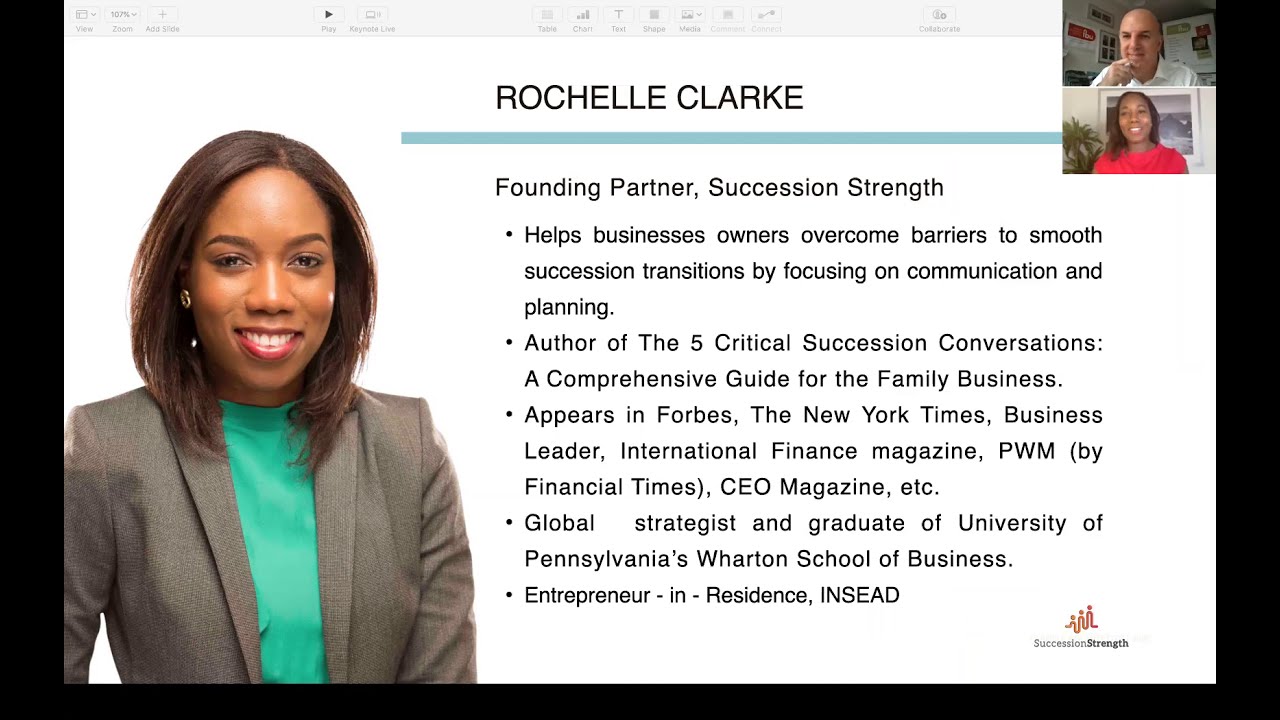
Values: Do they really matter in a family business? Families have enough on their plates when it comes to running a successful business. Do values really matter or do they just belong on the company website? What role should values have in running a business? Should values evolve? How can families define their values? Join Paul Andrews with Rochelle Clarke from Succession Strength and a discussion that covers the role of values and their importance for the long term sustainability of families in business.
- Resilience & The Family Firm
Prior to the onset of the global pandemic Dr Linda Murphy (Lecturer – Management, Cork University Business School) and Dr Giovanna Campopiano (Director of the Centre for Family Business at Lancaster University Management School) had begun a research project into the organisational resilience of family firms. The topic is in the spotlight even more in light of ongoing events and here they share their initial findings from the research with us and explore some of the ways that family firms have been resilient throughout these challenging times.
- Family Business Insight With Sam Kirk, J-Flex Manufacturing
An insight into J-Flex from the second generation highlighting the steps taken since taking over and their plans for the future. Sam is Managing Director of J-Flex, a second-generation family business based in the East Midlands. The company was founded in 1984 by John and Jill Kirk, and supplies innovative rubber solutions to international, industrial markets such as; food and drink, pharmaceutical, renewable energy, marine, rail and automotive. In 2018 the business underwent its first major succession with Sam becoming Managing Director and John taking on the role of Chairman. Since his appointment, Sam – working alongside a highly-respected family business mentor and a newly formed Senior Leadership Team – developed and implemented an ambitious new Vision and Company Plan that has provided clear focus and direction and has seen J-Flex earn recognition at the Midlands Family Business Awards and the Institute of Directors Awards, where Sam was named Young Director of the Year. Join us to hear more of the J-Flex story and the plans the second generation are implementing to help the business move forward.
- The Yorkshire Family Business Forum 2021
Linking in with Yorkshire Family Business Day 2021 this family business forum for the Yorkshire family business community seeks to celebrate the sector and provide insights, learning and best practice to enable family firms to survive for generations to come. Paul Andrews was joined by David Kerfoot MBE DL, Jason Rockett (Potter Space) and Fergus Bailie (Bailie Group). David Kerfoot MBE DL, High Sherriff of North Yorkshire David founded The Kerfoot Group jointly with his wife Elizabeth in 1980 using £300 capital which grew to sales of over £80 million on a global basis exporting to over 50 countries. The company processed, packed and distributed vegetable oils on three sites in the Port of Goole with a subsidiary in Poland and a sales office in New York. The Group was sold to French agricultural giant Avril in 2015. David is a passionate social entrepreneur and has a long history of community service. Currently Chairman of the LEP for York, North Yorkshire and the East Riding, Chairman of the Pendragon Community Trust which he helped found 12 years ago to build a facility for the multi disabled, trustee of a food bank and founder of an initiative called Smile for Moldova which supports people in the poorest country in Europe. He is also a patron of the Samaritans and a lifelong activist in the Prison Service as well as being a trustee of Breadline. He is a Deputy Lieutenant of North Yorkshire and High Sheriff of North Yorkshire for the year 2020. Jason Rockett, Managing Director of Potter Space Jason is the new, non-family Managing Director of Potter Space and brings a wealth of property experience to the company, having operated at a high level within the sector for more than 25 years. He joins from Gentian Development Group, prior to which he was at Scarborough Property Group and, more latterly, Sheffield United. Jason spent over ten years with the Scarborough Property Group, ultimately as Development Director responsible for the growth and management of a £350 million+ development portfolio within London, the South of England and Wales. From a standing start with Gentian, he built a diversified £25million+ portfolio of completed projects and created a development pipeline of more than £50 million. Prior to that he was CEO of Sheffield United where he was responsible for the growth and diversification of the club’s off-field revenue streams, as well as creating an international presence across three continents. He will share an insight into the family business and what inspired him to join the family firm. Fergus Bailie, Group CEO, Bailie Group (formerly known as the Baird Group) Family-owned communication specialist The Bailie Group has recently revealed a fresh identity and a completely new name, as the 158-year-old firm eyes a £20 million rise in turnover, by the end of 2021. Group CEO Fergus Bailie will share his thoughts on entering the family business and how purpose and values underpin all that they do. Their intention is to continue with a programme of internal investment and acquiring companies which meet their philosophy and purpose, for the benefit of future generations. As well as hearing their family business stories, key learnings from the session include: – The need for clarity of purpose Communication at all levels of the organisation The need to be adaptive and flexible as a business The need to talk (customers, suppliers, staff, other stakeholders) Help others and invest in the long term Listen to the people around you Take account of the wellbeing of others Keep checking in on staff.